
Introduction
Your film concept is compelling. Your script is brilliant. Your creative vision is clear. But without a professional pitch deck for film, you’re asking investors to fund your project based on passion alone. In the competitive world of film financing, a well-crafted pitch deck is your most powerful tool for securing funding, attracting distribution partners, and convincing industry professionals to believe in your project.
Whether you’re creating a feature film pitch deck, developing a documentary film pitch deck, or pitching your first short film pitch deck, understanding how to structure and present your visual proposal is essential. This comprehensive guide covers everything required to create a compelling film pitch deck PDF, including detailed slide structures, specific content recommendations for different production types, best practices for presentation, and strategies for maximizing your pitch deck’s persuasive power.

What Is a Pitch Deck for Film and Why Does It Matter?
Understanding the Fundamentals
A pitch deck for film is a visual presentation that communicates your film project’s essence, creative vision, financial requirements, and market potential. Typically ranging from 10-20 slides, your pitch deck is designed to be presented in 15-30 minutes, though it also functions as a standalone document circulated to potential investors, distributors, and collaborators.
Your pitch deck serves multiple critical purposes simultaneously:
For Investors: It demonstrates you’ve thoroughly planned your project and understand both creative and commercial aspects. A professional pitch deck proves you’re serious about execution and worth the financial risk.
For Distributors: It shows your film’s marketability and audience appeal. Distributors evaluate whether they can profitably exploit your film across multiple platforms and territories.
For Creative Teams: It communicates your artistic vision, visual style, and thematic intent. Cinematographers, production designers, and editors understand your project’s tone and aesthetic before being hired.
For Your Own Planning: Creating a pitch deck forces clarity about your project. What’s your story really about? Who will watch it? How will it make money? A compelling pitch deck requires answering these questions honestly.
The Strategic Difference: Pitch Deck vs. Business Plan
Many filmmakers confuse pitch decks with business plans. They’re complementary but distinct documents:
Pitch Deck: Visual presentation (10-20 slides) designed to be presented live or circulated as a PDF. Emphasizes visual storytelling, emotional engagement, and compelling narrative. Typically 15-30 minute presentation.
Business Plan: Comprehensive written document (15-25 pages) providing detailed financial projections, market analysis, and operational planning. Emphasizes data, financials, and strategic planning.
Your pitch deck is the introduction—the visual hook that captures interest. Your business plan provides detailed information for serious investors. Many projects use both, with the pitch deck introducing your project and the business plan providing depth for interested parties.
Essential Slides for a Feature Film Pitch Deck
A professional feature film pitch deck should include these core slides:
Slide 1: Title Slide
Your first impression matters. Your title slide establishes your film’s tone and brand.
Include:
- Film Title: Prominently displayed in compelling typography
- Tagline: A catchy one-liner capturing your film’s essence (“A love story that transcends time,” “Justice demands sacrifice”)
- Visual: A striking image, poster concept, or visual that establishes tone and genre
- Your Name and Title: Your name, role (writer/director/producer), and production company name
- Logo: Your production company logo (if established)
Design Tip: Your title slide’s visual design should reflect your film’s tone. A horror film’s title slide should feel ominous. A romantic comedy should feel warm and approachable. Design choices communicate before words do.
Slide 2: Logline
Your logline is the most important piece of your pitch deck. Many investors spend minimal time reviewing slides—they evaluate whether your logline hooks them enough to continue.
Logline Requirements:
- Length: One sentence, maximum 25-30 words
- Content: Setup (who), conflict (what they want), complication (what’s in their way)
- Tone: Match your film’s tone—light for comedies, intense for thrillers
- Hook: Make investors immediately understand why audiences will care
Weak Logline: “A man tries to save his family from danger.”
Strong Logline: “When his estranged daughter vanishes without a trace, a disgraced former detective must confront the dark secrets of his past to find her before a killer strikes again.”
Slide 3: Genre and Comparable Films
Establish where your film fits in the market and its commercial potential.
Include:
- Genre(s): Primary and secondary genre(s) (Drama, Thriller, Crime Drama)
- Comparable Films: 2-3 successful films in your genre/tone/budget range
- Why These Comps: Brief explanation of why each is relevant to your film
Pro Tip: Choose comps that are actually comparable. If your film is a $2 million indie drama, don’t compare it to “Parasite” (which won Best Picture). Instead, compare to other successful indie dramas with similar budgets and distribution strategies.
Slide 4: Synopsis
Your synopsis hook the audience into your story.
Include:
- Short Synopsis (½ page): A compelling overview of your story without major spoilers. Focus on emotional beats and character journey rather than plot mechanics.
- Visual Support: Include images or scenes that convey your story’s emotional core
Structure Your Synopsis:
- Opening hook (introduce protagonist and their world)
- Central conflict (what drives the story forward)
- Emotional journey (how the protagonist changes)
- Thematic resonance (what the story is really about)
Slide 5: Themes and Tone
Communicate what your film is really about at a thematic level.
Include:
- Central Themes: 2-3 main themes your film explores (redemption, identity, justice)
- Tone Description: How your film feels (intimate, epic, dark, comedic)
- Visual References: Images that convey your film’s emotional tone
- Director’s Perspective: Brief statement about why these themes matter to you
Slide 6: Characters
Introduce main characters with compelling descriptions and visual dreamcasting.
Include:
- Character Name and Role: Who they are in the story
- Character Arc: How they change through the film
- Visual Dreamcasting: Images of actors you envision in the role (if applicable)
- Character Importance: Their relationship to the central conflict
Example:
Sarah Chen, 42 – A dedicated single mother working two jobs to support her daughter. Pragmatic, resourceful, but emotionally guarded. Through the film’s journey, she learns to trust and open her heart again.
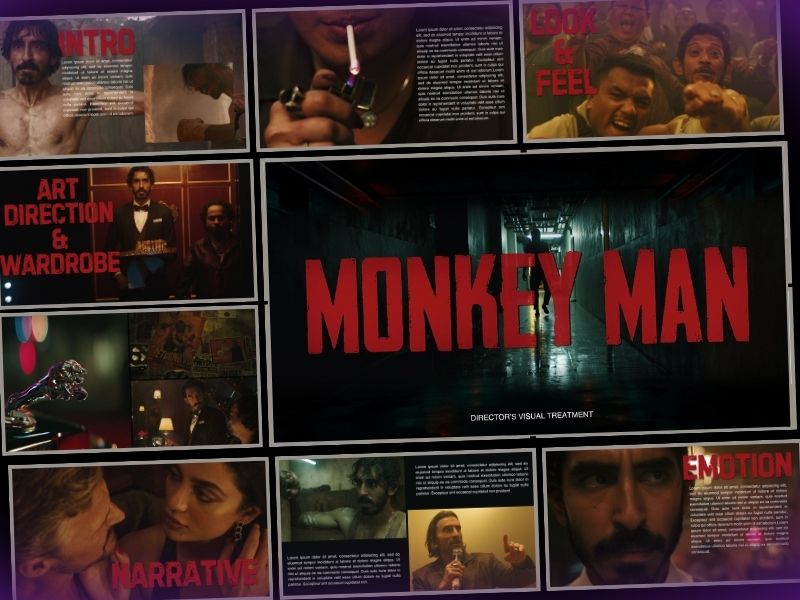
Slide 7: Visual Style and Mood Board
Show investors how your film will look and feel.
Include:
- Visual References: 4-8 images establishing your film’s aesthetic
- Color Palette: Dominant colors and their emotional associations
- Cinematography Style: Description of camera work and visual approach
- Locations/Settings: Visual representation of key environments
- Mood: Images conveying emotional atmosphere
Practical Approach: Create a mood board using:
- Reference images from films with similar visual styles
- Photographs from locations you’ll use
- Color studies and lighting references
- Artwork and design inspiration
Slide 8: Director’s Vision
Communicate the director’s unique perspective and approach.
Include:
- Director Bio: Relevant experience and previous work
- Director Statement: Personal explanation of why this story matters and how they’ll tell it
- Stylistic Approach: Unique elements distinguishing this from other films in the genre
- Creative Inspirations: Films, artists, or stories influencing the director’s vision
Slide 9: Production Timeline and Budget Overview
Demonstrate you’ve planned realistic production logistics.
Include:
- Development Status: Where the project is currently (script completed, financing stage, pre-production ready)
- Timeline: Pre-production duration, principal photography dates, post-production estimate
- Key Milestones: Financing complete, principal photography begins, post-production complete
- Budget Range: Overall budget category ($500K-$1M, $1M-$5M, etc.)
Slide 10: Marketing and Distribution Strategy
Show how you’ll get your film to audiences.
Include:
- Target Audience: Primary demographics and audience characteristics
- Distribution Strategy: Theatrical, streaming, festivals, alternative platforms
- Marketing Approach: Social media, press, festival strategy, influencer partnerships
- Festival Circuit (if applicable): Tier-1 festivals (Sundance, SXSW, Tribeca) or specialized festivals
- Streaming/VOD Strategy: Platforms and release timing
Slide 11: Team
Establish credibility through your creative and production team.
Include:
- Producer/Filmmaker Bio: Background, relevant experience, previous successes
- Director Bio: Filmography, awards, unique perspective
- Key Department Heads: Cinematographer, Production Designer, Editor—anyone bringing significant prestige
- Attachments: Any recognizable cast, experienced crew, or industry mentors
For emerging filmmakers without extensive credits, highlight:
- Film school credentials and honors
- Award-winning previous work
- Industry mentorship or collaboration
- Unique personal story or perspective
Slide 12: Funding Requirements and Investment Opportunity
Clearly state financial requirements and potential returns.
Include:
- Total Funding Needed: Clear statement of capital required
- Funding Already Secured: How much you’ve already raised
- Funding Use: How investment will be allocated (production, post-production, marketing)
- Investment Opportunity: Potential returns and timeline for recoupment
- Risk Disclosure: Honest acknowledgment that film investing is high-risk
Slide 13: Contact Information
Make it easy for interested parties to follow up.
Include:
- Contact Name and Title
- Email Address
- Phone Number
- Production Company Website
- Social Media Links
- Mailing Address

Documentary Film Pitch Deck: Specialized Structure
A documentary film pitch deck requires different emphasis than narrative film pitch decks, reflecting documentary’s unique production approach.
Core Sections for Documentary Pitch Decks:
Front Cover: Compelling image establishing your documentary’s subject and emotional tone.
Documentary Logline: One sentence capturing your film’s central question or revelation.
Premise/Proposal: Clear explanation of what your documentary is about and why it matters. Include the central story, key characters or subjects, and the documentary’s unique angle on its subject.
Story Arc: Essential for documentaries, which don’t follow traditional screenplay structure. Show how you’ll structure your narrative from beginning to end, identifying the emotional journey despite being non-fiction.
Filmmaking Approach: How you’ll tell this story differently than competitors. What narration style? Interview-based or observational? Archival footage or contemporary filming?
Access and Subject Matter: Explain your access to subjects, locations, and archival materials. Are subjects willing to participate? Do you have rights to materials you’ll use?
Audience: Identify target viewers and platforms. Some documentaries target educational/institutional markets, others seek theatrical or streaming distribution.
Production Team Bios: Director’s previous documentaries and relevant expertise. Producer’s experience with similar subject matter. Cinematographer’s documentary experience.
Target Platforms: Where will your documentary find audiences? Film festivals, educational institutions, streaming platforms (Netflix, HBO), theatrical, broadcast television?
Budget and Financing: Documentary budgets differ significantly from narrative films—often lower, with different funding sources (grants, foundations, broadcast partnerships).
Short Film Pitch Deck: Condensed Structure
A short film pitch deck should be leaner than feature film decks while maintaining essential information.
Core Sections for Short Film Pitch Decks:
Title Slide: Film title, visual, your name/role, runtime (under 15 minutes typically)
Logline: One compelling sentence
Genre and Comparables: Where it fits in the market
Synopsis: Concise plot overview (½ page maximum)
Characters: Main character(s) with brief descriptions
Visual Style: Mood board showing aesthetic approach
Director’s Vision: Why this story and why now
Budget and Funding Needs: Specific amount required and use
Contact Information: How to reach you
Optional Additions:
- Teaser trailer (if available)
- Director’s previous work
- Festival strategy
- Unique hook or unique angle
Short film pitch decks work differently than feature decks. Many short films don’t require significant investor capital—they’re often funded through grants, crowdfunding, or personal investment. Your pitch deck should reflect realistic funding needs (typically $5,000-$50,000 for shorts).
How Many Slides Should Your Pitch Deck Include?
The 10-20-30 Rule
Venture capitalist Guy Kawasaki popularized the “10-20-30 rule” for pitch decks:
- 10 slides maximum
- 20 minutes maximum presentation time
- 30-point font minimum
However, film pitch decks often require more than 10 slides to adequately cover all essential elements. Most professional film pitch decks run 12-20 slides.
Optimal Slide Counts by Production Type:
Feature Film Pitch Deck: 15-20 slides (comprehensive information needed for investor confidence)
Documentary Pitch Deck: 12-18 slides (emphasis on story, access, and unique angle)
Short Film Pitch Deck: 10-15 slides (leaner, more focused presentation)
Pitch Deck for Festivals: 8-12 slides (emphasize creative vision over financial detail)
Pitch Deck for Distributors: 15-18 slides (focus on market appeal and distribution potential)
What to Include at Each Length:
If creating 10 slides: Title, logline, genre/comps, synopsis, characters, visual style, team, funding, contact
If creating 15 slides: Add director’s vision, marketing/distribution strategy, production timeline
If creating 20+ slides: Add detailed budget breakdown, production plan details, comparable film analysis, investor returns structure
Quality over quantity matters more than hitting a specific number. Every slide should earn its place by communicating essential information. Remove slides that don’t advance your pitch.
How to Make a Pitch Deck for Film: Step-by-Step Process
Step 1: Define Your Core Message
Before designing anything, articulate your film’s essence:
- What is your story really about?
- Why does it matter?
- Who will watch it?
- What makes it different from similar films?
Your answers to these questions should inform every slide.
Step 2: Research Comparable Films
Identify 3-5 films genuinely similar to yours:
- Watch them thoroughly
- Research their production budgets
- Analyze their distribution and performance
- Understand their target audiences
- Study how they were marketed
This research informs your pitch deck’s tone, positioning, and confidence in your project’s marketability.
Step 3: Gather Visual Materials
Create or collect visual references:
- Mood board images (locations, color palettes, visual references)
- Location photographs
- Conceptual artwork or production design sketches
- Potential casting suggestions with images
- Production stills from any footage shot
Quality visuals significantly impact pitch deck effectiveness. Poor imagery undermines your professional credibility.
Step 4: Write Your Logline
Spend significant time perfecting your logline—it’s your pitch deck’s most important element:
- Write 10+ variations
- Test them with other filmmakers
- Ensure emotional hook and clear conflict
- Make it specific to your film (not generic)
- Ensure it communicates why audiences will care
Step 5: Create Your Slides
Use professional presentation software:
PowerPoint: Industry standard, widely compatible
Google Slides: Cloud-based, collaborative, free
Keynote: Apple’s offering, visually sophisticated
Adobe InDesign: Professional design tool for polished PDFs
Canva: User-friendly design platform with templates
Build your slides with consistent branding:
- Choose a color palette reflecting your film’s tone
- Select readable typography
- Maintain white space for readability
- Use high-quality images
- Ensure visual hierarchy (most important information prominent)
Step 6: Design for Presentation and PDF Distribution
Your pitch deck must work in two contexts:
Live Presentation:
- Readable from distance (minimum 24-point font)
- Minimal text (speak to expand on slides)
- High contrast for visibility
- Animation used sparingly (focus remains on presenter)
PDF Distribution:
- Include slightly more text than presentation version
- Readable even at small sizes
- Standalone comprehension (viewers won’t hear presenter explanation)
- Professional PDF export settings
Many filmmakers create two versions: a presentation deck (sparse, visual) and a distribution deck (more detailed, readable standalone).
Step 7: Get Feedback from Industry Professionals
Before finalizing your pitch deck, seek feedback from:
- Experienced producers and line producers
- Industry mentors
- Other filmmakers in your genre
- Your intended audience (if possible)
Ask specifically:
- Does the logline hook you?
- Are budget/timeline realistic?
- Is the comparable films analysis convincing?
- What questions remain unanswered?
- What stands out positively?
- What needs clarification?
Step 8: Practice Your Pitch
If presenting live, practice thoroughly:
- Time your presentation to stay within 15-30 minutes
- Prepare responses to anticipated questions
- Practice looking at audience, not slides
- Record yourself and watch for improvements
- Present to trusted colleagues and iterate
Your presentation delivery matters as much as slide content.
Step 9: Export and Distribute Professionally
Create proper file formats:
For Presentation:
- PowerPoint (.pptx)
- PDF (also create backup)
- Video presentation (recording of your live pitch)
For Distribution:
- High-quality PDF (ensure 300 DPI for print quality)
- Compressed version for email (smaller file size)
- Links to any video materials (teaser trailer, behind-the-scenes)
Step 10: Track and Iterate
Keep version numbers and dates on your pitch deck:
- Pitch_Deck_v1_October2025.pdf
- Pitch_Deck_v2_November2025.pdf
As you get feedback and your project evolves, update your deck. A living document improves over time rather than remaining static.

What to Include in a Film Pitch Deck: Content Best Practices
Clarity Over Cleverness
Your pitch deck should communicate clearly. Avoid overly complex graphics, unclear metaphors, or inside jokes that only some investors understand. Every element should serve clear communication.
Specific Over Generic
Generic statements (“This is a great story that audiences will love”) signal amateur work. Specific statements (“This film appeals to the 47 million women ages 25-45 who watched similar thrillers on Netflix”) demonstrate research and market understanding.
Data-Backed Projections
Support claims with data:
- Market research about comparable films
- Audience demographic data
- Distribution platform statistics
- Historical performance of similar projects
Investors immediately recognize unfounded speculation.
Realistic Over Optimistic
Conservative accuracy impresses investors more than optimistic exaggeration. If comparable films earned $2-5 million total across platforms, project similar figures—not $50 million.
Honest About Challenges
Acknowledge challenges your film faces and your mitigation strategies. Small production budget? Emphasize creative approach and location efficiency. Niche subject matter? Highlight underserved audience. This realism builds investor confidence.
Visually Professional
Your pitch deck’s visual quality reflects your film’s projected quality. Investor psychology: “If their presentation is sloppy, how will their film be?” Invest in professional design if possible. If DIY, use quality templates and maintain consistent, polished aesthetics.
Common Film Pitch Deck Mistakes and How to Avoid Them
Mistake 1: Too Much Text
Overcrowding slides with text causes audiences to read rather than listen to your presentation.
Solution: Use slides as visual support, not script. Each slide should have minimal text (key points only). You expand verbally during presentation.
Mistake 2: Unfocused Narrative
Jumping between topics without clear connection confuses audience and waters down your pitch.
Solution: Follow logical flow: introduce story, establish emotional hook, address commercial viability, present team and plan, request funding. Each slide advances narrative toward a clear conclusion.
Mistake 3: Unclear Funding Ask
Investors shouldn’t wonder how much money you need or why.
Solution: Clearly state total funding required. Explain how it will be used (production, post, marketing). Show funding breakdown across categories.
Mistake 4: Ignoring Investor Psychology
Investors make decisions emotionally then justify them logically. Overly data-heavy pitch decks fail to engage heart.
Solution: Lead with emotional hook (compelling story, stunning visuals). Follow with rational justification (market data, team credentials, financial projections). Balance head and heart.
Mistake 5: Unrealistic Comparable Films
Comparing your indie drama to “The Godfather” signals you don’t understand market positioning.
Solution: Choose comps genuinely similar in budget, genre, and distribution. Explain why each is relevant.
Mistake 6: Weak Visual Identity
Generic stock images and uninspired design undermine professionalism.
Solution: Invest time in creating cohesive visual identity. Use intentional color palette, compelling imagery, professional typography. Your design should reflect your film’s aesthetic.
Mistake 7: Missing Key Information
Investors have questions you haven’t answered in your pitch deck.
Solution: Include enough information to address likely questions. Appendices provide detailed budgets, bios, sample script pages. Anticipate questions investors will ask.
Mistake 8: Unclear Team Credentials
“An experienced director” without specific credits lacks credibility.
Solution: Detail actual experience. Link to previous work. Include awards and recognition. For emerging talent, explain film education, mentorship, or relevant skills.
Mistake 9: Ignoring Distribution Realities
“We’ll get a distributor” is vague and unrealistic.
Solution: Research specific distributors and platforms relevant to your film. Understand distribution realities for your budget and genre. Name specific targets.
Mistake 10: Presentation Nervousness
A nervous presenter undermines even excellent slide content.
Solution: Practice extensively. Know your material inside-out. Remember: investors want to say yes—they’re looking for reasons to believe in your project. Confidence comes from preparation.
Feature Film Pitch Deck PDF: Professional Presentation Formats
When distributing your feature film pitch deck PDF, ensure professional formatting:
Cover Page:
- Film title and tagline
- Production company logo
- Producer/director name and contact information
- Date of document
Table of Contents:
- Helps viewers navigate PDF
- Professional touch
Main Content:
- High-quality images
- Clear typography
- Readable at any size
- Consistent branding throughout
Appendices:
- Detailed budget breakdown
- Full character biographies
- Sample script pages
- Team member full biographies
- References/supporting documents
Back Matter:
- Contact information
- Company website
- Social media links
- Call to action (what next?)
PDF Export Settings:
- Minimum 300 DPI for professional quality
- Embed all fonts (prevents substitution)
- Optimize for both screen viewing and printing
- Compress for reasonable file size (8-15MB typical)
Pitch Decks by Production Budget
Micro-Budget Film Pitch Decks ($5K-$50K)
Focus on:
- Creative vision and unique story
- Crew and cast you already have
- Shooting locations (use what’s free)
- Strong logline and emotional hook
- Lean budget that feels achievable
Emphasize: Passion, creativity, efficient production approach
Low-Budget Film Pitch Decks ($50K-$250K)
Include:
- Established director with relevant experience
- Key cast attachments (recognizable names help)
- Specific shooting locations and permits
- Detailed production plan
- Realistic financial projections
- Comparable film analysis
Emphasize: Director’s vision, cast appeal, market understanding
Mid-Budget Film Pitch Decks ($250K-$1M)
Require:
- Professional production team
- Significant cast or prestige director
- Detailed location breakdown
- Comprehensive budget with contingencies
- Strong market analysis and distribution strategy
- Potential for international sales
Emphasize: Professional team, market viability, distribution potential
Studio/Large-Budget Film Pitch Decks ($1M+)
Demand:
- A-list director with proven box office
- Major cast attachments
- Completion bond considerations
- Complex financing structures
- International market analysis
- Sophisticated distribution and marketing strategy
Emphasize: Director/cast prestige, commercial appeal, international potential
The Future of Film Pitch Decks
Film pitch deck presentation is evolving:
Video Integration: More decks include teaser trailers, behind-the-scenes footage, or animated segments rather than static images.
Interactive Decks: Some producers create clickable PDFs or presentations with embedded video or links to supporting materials.
Personalization: Savvy filmmakers customize pitch decks for specific investors, emphasizing aspects most relevant to each funding source.
Live Pitch Events: Film markets and festivals increasingly feature pitch deck presentations as formal events. Skilled pitch presentation is becoming a valued skill.
Hybrid Formats: Combining pitch deck elements with business plan material into comprehensive submission packages.
Conclusion: Your Pitch Deck as Gateway to Funding
Your film pitch deck is the gateway between your vision and its realization. Whether you’re creating a feature film pitch deck PDF for serious investors, a documentary film pitch deck for foundations, or a short film pitch deck for festival submissions, the fundamentals remain constant: clear communication, emotional engagement, professional presentation, and realistic market understanding.
The most effective pitch decks don’t pretend films are sure bets. Instead, they demonstrate you understand both the creative and commercial aspects of filmmaking, have thoroughly planned your production, and represent a sound investment of time and money.
For filmmakers creating their first significant pitch deck, navigating the balance between creative vision and commercial viability, or seeking professional guidance developing investor-ready materials, expert consultation can prevent costly presentation mistakes and accelerate your path to funding.
At First Draft Filmworks (https://firstdraftfilmworks.com/), our production team brings comprehensive expertise in film pitch deck development and investor presentations. With over 8 years of experience across diverse production types, we’ve helped filmmakers create pitch decks for features, documentaries, web series, and commercial productions—helping them secure funding and attract distribution partners.
Our Film Pitch Deck service provides strategic guidance on content and structure, professional design consultation, presentation coaching, and comprehensive materials tailored to your specific project and target funding sources. Whether you need a complete pitch deck developed from scratch, refinement of an existing deck, or coaching on live presentation skills, our team delivers professional-grade materials that communicate your project’s viability and creative vision.
Ready to create the pitch deck that secures your project’s funding? Visit https://firstdraftfilmworks.com/ to explore our Film Pitch Deck services and schedule a consultation with one of our production professionals today.
FAQ: Common Film Pitch Deck Questions
Q: What’s the difference between a pitch deck and a pitch?
A: A pitch deck is visual material (slides/PDF). The pitch is your verbal presentation of that material. You can have a great pitch deck but poor verbal pitch, or vice versa. Ideally, they complement each other.
Q: How long should my pitch deck presentation last?
A: 15-30 minutes is typical. This leaves time for investor questions and discussion. Avoid presentations exceeding 45 minutes—you’ll lose investor attention.
Q: Should I include my full script in my pitch deck?
A: No. Include a 1-2 page synopsis and key scenes showing tone/voice. Full script goes in appendices or is provided separately if requested.
Q: Can I use the same pitch deck for all investors?
A: You can start with a master deck, but customize for different audiences. An investor focused on international sales wants different emphasis than one focused on streaming platforms.
Q: What if I don’t have cast attached yet?
A: Use dream casting or casting ideas. Show images of actors you envision in roles. Be clear these are suggestions, not confirmed attachments.
Q: How often should I update my pitch deck?
A: Update when significant information changes (cast attachments, budget changes, production timeline shifts). Keep version numbers and dates.
Q: Should my pitch deck be funny or entertaining?
A: Your pitch deck should reflect your film’s tone. If your film is comedic, some humor is appropriate. However, maintain professionalism—avoid gimmicks that undermine credibility.
Q: What file format should I use for distributing my pitch deck?
A: PDF is industry standard (compatible across devices, formatting preserved). Also have PowerPoint version available if requested for editing.
Q: How do I know if my pitch deck is ready?
A: Get feedback from 3-5 industry professionals. Does logline hook them? Are budget and timeline realistic? Do questions remain? Iterate until feedback is consistently positive.
Q: What should my closing slide include?
A: Contact information, your name and title, production company details, and clear call to action (“Let’s make this film” or “I’d love to discuss this project further”).

